
See Why Chemtech Plastics is #1 in Multi-Shot Molding

What is Multi-Shot Injection Molding?
Multi-shot injection molding is a form of precision molding that molds two or more materials onto each other in one plastic molding cycle. The end result is an integrated part with multiple distinct aspects. Multi-shot injection molding is used in numerous industries, such as automotive, consumer products and medical – just to name a few.
The two most common types of multi-shot injection molding are:
- Two-shot (2K) injection molding molds two different materials, colors or components together in a single cycle
- Three-shot (3K) injection molding molds three different materials, colors or components together in a single cycle
Whether to use 2K or 3K multi-shot injection molding is highly dependent on the needs of each individual project. While 2K is more commonly used, 3K is utilized for more intricate items. Chemtech Plastics utilizes exclusively 2k molding for medical components, but we specialize in both 2k and 3k in multi-shot molding for other industries. We can help guide you in the right direction for your unique project.
Multi-shot injection molding has a number of benefits. From a design perspective, this process accommodates greater flexibility to execute complex designs and features. This is useful for a part that is made of different materials or textures, like a part with a grip that incorporates both a hard and soft texture. Multi-shot molding also provides enhanced aesthetic benefits, since it can create one product with multiple colors.
Multi-Shot Injection Molding in the Medical Industry
The medical industry requires the manufacture of millions of parts per year. Due to our strong background in medical manufacturing, Chemtech Plastics engineers high-volume automated assembly lines that can not only meet production demands, but surpass them.
Chemtech Plastics has formed strong partnerships with medical device manufacturers that specialize in surgical and diagnostic applications. Our leading-edge multi-shot medical injection molding capabilities, high standards for design and manufacturing, careful selection of medical-grade materials, and our rigorous quality control measures set Chemtech Plastics apart.
Design for Manufacturing in Medical Multi-Shot Injection Molding
Design for Manufacturing (DFM) is an essential first step in designing complex medical parts. DFM is a process that determines the simplest and most cost-effective way to manufacture a part. Key considerations for DFM in multi-shot injection molding for medical parts are:
- Material. Medical parts must be biocompatible (being compatible with a living being without causing an adverse effect) and able to withstand sterilization and chemicals. Chemtech Plastics has extensive knowledge of the application and use of medical-grade and FDA-approved materials, including polycarbonate/acrylonitrile butadiene styrene, polyether ether ketone, and more.
- Dimensional accuracy. Tolerances for medical parts are incredibly tight. Designing multi-shot molds that can accommodate such precision is critical to manufacture a part that lives up to industry standards. Chemtech Plastics’ highly experienced team and specialized technology consistently design precise molds that are free from errors like warping and shrinkage. We produce tight-tolerance molded plastics with Class A surface finishes.
- Complex geometries. The designs of many medical parts are very complex. Chemtech Plastics can utilize our 2k multi-shot molding capabilities to design molds for parts with intricate and diverse features.
At Chemtech Plastics, all project stakeholders are involved in the DFM process, from designers and engineers to mold builders and technicians, working cross-functionally to challenge the design and come up with the best possible final product.
Meeting Industry Demands for Quality Control
In an industry that is quite literally life or death, strict quality control for every part of every device. Chemtech Plastics employs a DQS-Certificated quality management program that emphasizes defect prevention, reduction of variation and waste, and continuous improvement.
Chemtech Plastics also utilizes cutting-edge automation technology throughout the manufacturing process to ensure the parts we produce live up to our high standard of quality. For example, our automated assembly lines increase part consistency and reduce errors. We also employ an automated data collection method that provides process validation and component or device traceability, along with machinery validation.
If you have a medical part project that requires multi-shot plastic injection molding, partner with the industry leader. Chemtech Plastics manufactures critical medical component parts for diverse applications including robotic surgery, instruments, and tools, as well as medical operating devices for some of the world’s leading medical companies. For over four decades, Chemtech Plastics has been an industry-leading, full-service precision injection molding company, with both DQS-Certified for IATF 16949 : 2016 and ISO 9001 : 2015. Our state-of-the-art facility and dedicated team allow us to successfully take on tight-tolerance, critical-to-function projects. Contact us today to start your project.
- Published in Medical
Precision in Medical Plastic Injection Molding
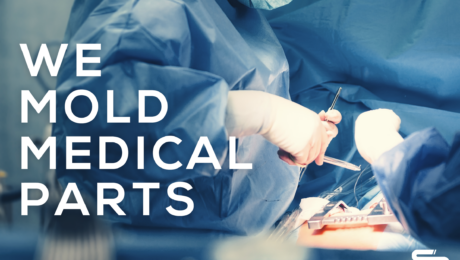
To protect and support the lives of patients and the roles of medical staff worldwide, medical and surgical components must be of the highest quality. One of Chemtech Plastics’ top specialties is crafting medical device components with our leading-edge medical plastic injection molder capabilities. With an emphasis on experience, quality control, and transparency, we are the medical plastic injection molding to turn to when you need precision components.
Our Technology
Amid our 135,000-square-foot facilities, Chemtech has 54 plastic injection molding machines of varying capacities and capabilities. These include the TOYO Si-6 Series, ARBURG Allrounder 520 S, and Sodick GL 150, to name but a few. Narrowing in on Sodick’s technology, these machines are highly accurate, reliable, and stable—perfect for producing and reproducing tight-tolerance components for medical equipment.
Our Range
We are well versed in a variety of premium plastic injection molding materials. PEI, or polyetherimide (Ultem®), is an excellent example of a stiff, durable plastic most often utilized for medical or scientific purposes, such as medical instrument parts. Chemtech understands the importance of using high-performance engineering-grade resins to obtain quality results. This goes hand-in-hand with having a team with expert-level skills to correctly process these unique, high-temperature plastics and specific custom molding machines.
Our Team
Precision is not only tight tolerances. Precision is also knowledge, communication, and relationships. We maintain partnerships with several medical device manufacturers specializing in surgical and diagnostic applications, thanks to our experience in medical manufacturing.
Do you have a project in mind? Request a quote from Chemtech Plastics today.
- Published in Medical
